Tuesday, 16 November 2021

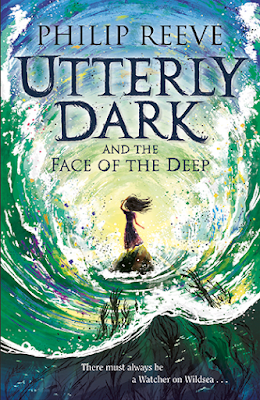
Book Review: Utterly Dark and the Face of the Deep (2021) by Philip Reeve

Let's talk about world-building. It's the keystone of sci-fi and fantasy novels, but in my reading experience it's the rare author in those fields who can do it well. Some writers over egg their pudding by cramming details about customs, languages, laws, and zoology into their writing until their "world" begins to feel like a fussy, claustrophobia-inducing, overfurnished apartment filled with things and people who apparently got their names as the result of a tragic draw of tiles from a Scrabble bag. These are the writers who probably spend their spare time building extravagant model train layouts. Frank Herbert and Iain Banks must have been enthusiastic hobbyists. On the other hand, there are authors who pay as little attention to world-building as I do to maintaining my lawn. I can recall an SF novel set on a planet that was one big ocean and yet contained only one described type of fish. One! N.K. Jemisin's The Fifth Season is very well-written but I couldn't finish it because the world-building was so threadbare. And that's the unique thing about world-building; otherwise good writers can be duds at that particular craft. 

The kings and queens of world-building would be Tolkien, Mervyn Peake, Ursula K. Le Guin, and Diane Wynne Jones. So where does that leave Philip Reeve, author of the Mortal Engines Quartet and a wide variety of other SF/F novels for the YA and JF crowd? I'd rank him as a princeling or dauphin, able to shape and populate living, breathing new worlds that fire the imagination without resorting to boxcar-sized info dumps. In Utterly Dark, the setting is an alternate reality Britain in the early Victorian period(?). Utterly Dark is also the name of a girl, a foundling who washed up on a beach in a basket on the island of Wildsea off the coast of England. She was adopted and raised by Andrewe Dark, who has the ancestral, but boring, task of watching the western seas from a tower at sundown every night. He's on the lookout for a legendary sea monster called the Gorm, who, so far, has never shown up. Andrewe drowns and Utterly takes over his job, at least until Will, Andrewe's brother, arrives from England. Soon enough, the Gorm goes from legend to kraken-ish reality, a cohort of Seaweed Men appear, as well as a sunken city and an irate Queen of the Deeps. 

Reeve's is on top of his world-building game here. Wildsea is a recognizably English world, but one seasoned with enough subtle differences to make it pleasingly new and intriguing. When the action moves on and under the ocean, things kick up a notch. The highlight is the sight of the phosphorescent souls/spirits of drowned men and women bobbing below the surface of the water like so many ethereal jellyfish. It's a brilliantly haunting image. Utterly Dark delivers in terms of imagination and adventure, but if there's problem with the novel is that it feels like an amuse bouche setting up the planned sequel(s). The undersea section is the most compelling part of the story, but, unfortunately, it doesn't take up enough of the plot. Here's hoping for an entirely sub-aqueous sequel. 

Tuesday, 9 November 2021

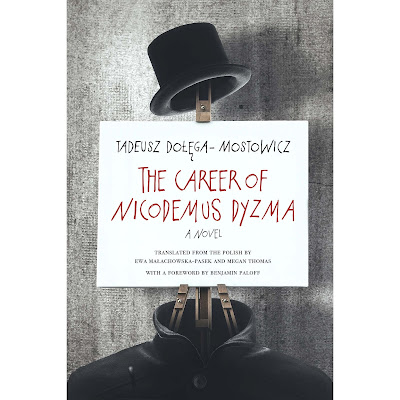
Book Review: The Career of Nicodemus Dyzma (1932) by Tadeusz Dolega-Mostowicz

This Polish satirical novel first gained fame when it became known that Polish-American novelist Jerzy Kosinski had plagiarized it for his novel Being There (1970), which later became a critically-acclaimed film starring Peter Sellers. It's only recently been translated, and it's easy to see what made it a tempting target for Kosinki: the story is wrapped up in details of Polish political and cultural life from the 1930s, but the basic concept of a ne'er-do-well making a meteoric rise from the gutter to the top thanks to a chance remark is clearly and easily transferable to other countries and times.

We meet Nicodemus, the titular rascal, just as he fails an audition to be a "taxi dancer," a job that entails being paid to dance with any and all partners at a low-rent dance hall. This is the latest in a lifetime of setbacks for Nicodemus, who's approaching forty and lives in the corner of a grotty Warsaw apartment with a prostitute and an unsympathetic landlady. Nicodemus is wandering the city when he comes into possession of an invitation for a banquet at one of Warsaw's top hotels. Since his worldly wealth consists of the evening suit which he'd hoped to use to get a dancing job, Nicodemus decides to don this disguise and go to the banquet in the hope of scarfing as much food as possible before he's thrown out. The banquet is attended by the country's political elite, and Nicodemus is just about to start gobbling some food when a man bumps into him and sends his food to the floor. In his rage at losing some nice grub, Nicodemus loudly curses the man out. The man is Terkowski, a minister in the government, who, it turns out, has many enemies and rivals, all of whom are delighted that he's been cut down a notch in public. Nicodemus harsh words are mangled and revised in the retelling, and within the space of an hour he's a hero. 

From there, Nicodemus rides a rising tide of rumor, dumb luck, and baseless supposition that casts him in the role of a financial savant who can solve Poland's economic woes. Nicodemus is avaricious enough to seize this opportunity, and cunning and ruthless enough to rise still further. The only person who sees through him immediately is an aristocratic madman, the brother of a wealthy heiress Nicodemus eventually marries. As the novel ends, Nicodemus is contemplating an offer to form Poland's next government.

The novel's satire is broad and savage, and Nicodemus's rise to the top is cleverly plotted. The author is particularly good at showing how the elites Nicodemus moves among are eager and willing to interpret his ignorant and clueless statements as pearls of wisdom, and a lot of the humour arises from this dichotomy. Any comparisons to Donald Trump are entirely appropriate. A sub-plot about a cult of devil-worshipping women who appoint Nicodemus as their leader feels out of place, but I'll assume it would have had some meaning for the novel's original audience. It's clear Kosinski stole this novel's plot, but I'd guess Dolega-Mostowicz was inspired by the story of Wilhelm Voigt. In 1906 Voigt disguised himself as a German Army captain, commandeered a group of soldiers in the small town of Kopenick, marched to the town hall and had the town's mayor arrested on fraud charges. He then took 4,000 marks from the town coffers as "evidence" and promptly disappeared. Voigt was a career petty criminal, and the success of his scam relied on the automatic and unthinking respect Germans gave to army officers. Voigt and his ruse became famous (he made a personal appearance tour!), and his story was told in films and a play called The Captain of Kopenick. The Big Lie, it seems, works equally well in fiction and real life.

Thursday, 4 November 2021

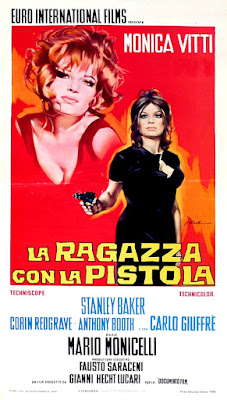
Film Review: The Girl with a Pistol (1968)


The amazing variety and quantity of good to great films produced by the Italian film industry from, say, 1955 to '75 never ceases to amaze me; what's even more startling is how many of these films are barely known or even forgotten. The big name directors like Fellini, Bertolucci, and Antonioni still get their justly deserved due, but filmmakers such as Elio Petri, Mario Monicelli, and Antonio Pietrangeli, like the other three, should be in the pantheon of directors famous enough to be known by their last names only. 

Monicelli,  the director of The Girl with a Pistol, was, and is, famous for Big Deal on Madonna Street (1958), but his greatest film, The Organizer (1963), a beautifully-crafted and entertaining story about a labour revolt in 19th-century Turin, never turns up on listicles of all-time great films. Girl is a picaresque comedy that's good, but not great, and features some of the best qualities of Italian cinema from that period. And, of course, it's almost forgotten. 

Assunta, played by Monica Vitti, is a young Sicilian woman who is accidentally abducted by her sister's suitor, Vincenzo. According to Sicilian custom, a woman taken like this must marry her kidnapper to avoid the shame of being a "dishonoured" woman. Assunta is happy to have been taken, but Vincenzo is alarmed by her sexual enthusiasm, which he feels make her a "shameless" woman. He abandons her and flees to England. Sicilian tradition dictates that Vincenzo should be killed by a male member of Assunta's family to restore Assunta's honour, but there are no men in Assunta's family. Assunta decides to follow Vincenzo to England and kill him herself.

What follows is a road movie as Assunta bounces around England searching for Vincenzo and experiences multiple culture shocks as she encounters a vastly more liberal society. After a variety of comic adventures she becomes romantically involved (sort of) with an English doctor (played by Stanley Baker) begins working as a model, becomes liberated, and finally gets a measure of revenge against Vincenzo. 

The humour in Girl is often on the broad and silly side, but Vitti's skillful, charming performance makes most of it palatable. Although the film gets some comic mileage out of poking fun at Brits (OMG men in kilts! Gay aristos!), the sharpest comic barbs are aimed at Sicily's codes of honour, modesty, and machismo that trap women and men in ridiculous and dangerous relationships. This is driven home in the film's first scene in which a rooftop full of single men dance the twist with each other while looking longingly at a shuttered window across the street behind which single women dance together to the same music. In this regard Girl is very on point for Italian cinema in its charting of the massive fault lines in Italian society. The other hallmark of the best Italian directors is their strong visual sense, and that's very much on show here. The scenes in Assunta's village are strikingly composed and include several brief fantasy sequences that are of a Fellini standard. But the English scenes! Sometimes it takes a stranger to see a country as it really is, and Monicelli shows us images of the country that UK directors of the time probably avoided. Part of the story takes place in Sheffield, and Monicelli delights in showing its blackened buildings and smoky atmosphere. And his London isn't swinging, it's dirty and filled with poky little restaurants and cafes. The film, despite being a big hit in Italy, was never released in the UK, and one wonders if it was because of how it depicted Britain and the British.

This film exists--barely, it seems--on DVD, but I saw it on YouTube, and that print has pretty minimal subtitles. Despite that drawback, it's still very entertaining and a reminder that for twenty years the Italians ruled cinema. 

Friday, 22 October 2021

Book Review: Child of All Nations (1938) by Irmgard Keun


Remember the Eloise books by Kay Thompson about a precocious ten-year-old who lives in New York's swanky Plaza Hotel with her nanny and pet pug and turtle? Now imagine Eloise plunked down with her parents in pre-war Europe and on the run from fascism, and you'll have a rough idea of what Child of All Nations delivers. Like The Passenger, which I reviewed previously on this blog, this novel is about Germans fleeing their country, one step ahead of the Gestapo.

In The Passenger, the title character never manages to leave Germany, while in this novel, Kully (the child of the title) and her parents have already left Germany and are hopscotching around Europe desperately trying to beg, borrow and steal enough money in order to pay for train fares, hotels, and boat passage to America. Told from Kully's point-of-view, Child of All Nations strives to capture the mood of Europe as it becomes awash with rumors and fears of war, and fills with political refugees desperately searching for a bolt hole, or at least a visa to a friendly country. 

Kully's father is a writer, spendthrift, and bon vivant who is ill-suited to life on the run. He drops his wife and child off in a series of hotels and rooms, some comfortable, others sketchy, while he hares around non-fascist Europe trying to get writing gigs, borrow from easy touches, and collect on monies owed to him. His wife is long suffering and frequently paralyzed with embarrassment when she's forced to lie or plead with hotel managers who want bills paid, now! Kully takes all the travel and hand-to-mouth living in stride, as children usually do, and finds amusement and wonder in the cavalcade of people she encounters as she crosses Europe, and then finally ends up in the U.S. The world she sees around her is often sad and desperate, and she has the intelligence to recognize this, but her innocence and childish joie de vivre keeps her mostly happy. It's Kully's sunniness and curiosity that throws the agonies of pre-war Europe into stark relief.

Irmgard Keun lived this story as an adult, fleeing Germany in the late '30s with her partner, Joseph Roth, a Jewish German journalist and author. Both were banned authors in Germany. Roth died in Paris in 1939 from acute alcoholism, while Keun hid out in Belgium, changed her name and then spent the rest of the war in Germany. Her novel The Artificial Silk Girl  (1931) is set in the last days of Weimar Germany, and in Ferdinand, the Man with a Kind Heart (1950) she paints a gently comic picture of Germany in the immediate aftermath of the war. Both are excellent and, fortunately, still in print.

Thursday, 14 October 2021

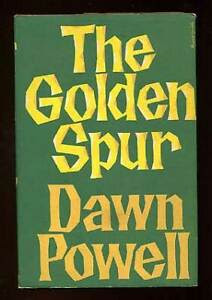
Book Review: The Golden Spur (1962) by Dawn Powell

There's a small army of writers who are famous for not being famous, or at least not famous enough. Some of the famously not known include Barbara Pym, Olivia Manning, Charles Portis, James Salter, and Thomas Berger. Dawn Powell, who wrote novels about New York City's cultural movers and shakers and spear carriers from the 1930's to '60s, is in the vanguard of this group. Gore Vidal championed her in in the late '80s, and from then on her rise to being a celebrated un-famous author was certain. Yes, she truly does deserve to a greater degree of fame.

Powell wrote novels set in the Midwest, where she was born and raised in Dickensian poverty, and New York City, where she lived from the early '20s until her death in 1965. The Golden Spur is a N.Y.C. novel. The main character is Jonathan Jaimison, a Candide-like young man who moves to New York to find his father. He was born illegitimate in Ohio, the son of a woman who lived and worked briefly in New York as a typist in 1928. Based on a few clues provided by his aunt, Jonathan thinks his father might be one of three men she came in contact with: a famous painter, a great writer, and a successful lawyer. 

Jaimison's search for his father is the loose framework Powell uses to give us a comic tour of New York's cultural population, from major artists down to the wannabes and the hangers-on. Greenwich Village is the centre of most of the action, which is where Jaimison first lands in NY and begins his quest to determine his parentage. Powell has great fun describing the tired boarding hotels, decrepit artists' studios, and speakeasy-ish bars that the characters move between; they form a kind of coral reef which sustains the city's floating population of mostly penniless artists and writers. The novel's title is that of a Village bar in which Jaimison is properly introduced to the city, and it can also be read as a poetic description of the ambition that drives many of the characters to seek fame and fortune.

Powell's comic tone is pitched just this side of savage. She skillfully dissects the pretensions and foibles of the great and the small, but her obvious affection for her characters and their desperate, sometimes hopeless, chase for success and respect stops her from skewering them too badly. Oddly, she seems to have more sympathy for her male characters, viewing their infidelities and selfishness as part and parcel of the artistic temperament. The women, especially a pair of groupies (before that word was known), often seem ditzy or predatory, or both. Jaimison is the Midwestern naif we follow through the big, bad world of Manhattan, and he's successful as the reader's proxy, but the best character is probably Earl Turner, a middle-aged writer who once had a great future but now begs and cadges his way through life while reflecting bitterly on what might have been. 

The end of the novel is kind to almost all of the characters, especially Earl, and Powell leaves us with the idea that what she, and her characters, find most fascinating and enthralling about the cultural whirlwind of New York is its constant change and the struggle to be a part of it. 

Wednesday, 6 October 2021

Flics and Voleurs

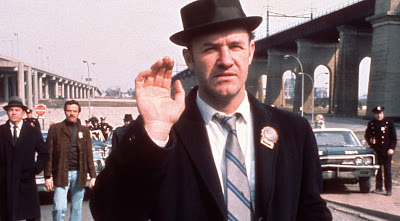
Popeye Doyle saying "Bonjour!"
The fiftieth anniversary of The French Connection (1971) has arrived, and it's a reminder that once upon a time, in the 1970s, stories about big-city cops, buddy-style or otherwise, were a staple of film and TV, largely thanks to William Friedkin's film. This genre, which I like to call cop noir, gloried in charting the decline and fall of the urban version of the American Dream; corruption was everywhere; streets were filthy and dangerous; bureaucracy stifled policing; the Mafia was the only efficiently functioning urban organization; and rough justice was the norm. Serpico, Busting, The Seven-Ups, Across 110th Street, Freebie and the Bean, and Dirty Harry followed on from The French Connection, and the TV imitators are too numerous to mention. The influence of these films also give rise to the Italian poliziotteschi films, which were an even more feverish take on urban blight and policing. 

Like any overexploited genre, the cop film quickly became played out, and although the 1980s saw them continue to fill screens, the emphasis switched to comedy, over-the-top action and a glossy visual style that was miles from noir. The Last Action Hero (1993) starring Arnold Schwarzenegger was a broad parody of cop films, and it effectively announced the end of cop noir as a mainstream genre. At least on this side of the Atlantic.

Cop noir appears to be alive and well in France. Like the American films of the '70s, Gallic cop films take a gritty, uncompromising view of les flics operating in an environment of corruption, compromise, debilitating (from a cop point of view) legal restrictions, and powerful criminal gangs. Paris the City of Light is absent from this genre. The cops' field of operations is usually the sprawling banlieues  that ring Paris, filled with drab, decaying apartment blocks controlled by gangs of African and North African descent who appear to operate as an occupying army. The Eiffel Tower might make a cameo appearance as a distant spike on the horizon, but otherwise things feel very American: the music is rap, the cops and robbers nosh pizza and burgers, and everyone seems to drive outsized SUVs. No baguettes or jaunty accordion music.

Two of the best examples of this French sub-genre are from TV. Spiral (the French title is Engrenages) ran for eight seasons over 15 years starting in 2005. It has a large cast of cops and lawyers, and covers every conceivable kind of serious crime, from the initial police investigation to the politics of the French legal system. I'm making it sound dry, but it's filled with twists and turns, fraught personal and professional relationships, cliffhangers, and lots of suspect-slapping, but surprisingly little gunplay. It sometimes gets a bit melodramatic, but it's unrelentingly tense and enormously entertaining. Braquo ran for four seasons and is straight-up bonkers. It follows four members of a Paris investigative squad who, in each season, go from the frying pan to the fire to quicksand to a crocodile pit and back to the frying pan. The plotting stress-tests credulity, but the action is plentiful and so is the body count. 

On the film side, some of the better examples include 36 Quai des Orfevres, Les Miserables, Bac Nord, Rogue City, Lost Bullet, and Close Enemies. And here's some of their common tropes: displays of macho posturing that would make professional wrestlers blush; lots and lots of cigarettes; riots and near-riots whenever cops enter a banlieue; cops strongarming or blackmailing prosecutors; and at least one scene set in a frantic, strobe-lit nightclub that features a beating and/or killing in a washroom. A rather surprising one is that cops in these shows and movies are almost all white. The French police, like their American cousins, have a reputation for racism, but that issue doesn't come up as often as one would think in these films. The lack of minorities in cop roles undoubtedly reflects reality, but it's jarring compared to contemporary American films and shows which like to present racially diverse cop shops. 

So if you pine for the aesthetic of '70s cops films, with their grimy settings and tough, toxic cops, rest assured that the French are keeping the genre alive and ass-kicking. The French connection lives on, literally.
Friday, 1 October 2021

S.A. Cosby, Elmore Leonard, and White on Black Criminals

Blacktop Wasteland by S.A. Cosby is a savage, twisty crime thriller set in rural Virginia that delivers the goods in terms of intrigue, pace, and action. It also does something rare in mainstream genre literature: it places a Black protagonist (Beauregard Montage) at the centre of a violent criminal enterprise and lets him survive. What's more, he's the savviest character in the story and a skillful getaway driver. So there are three things Black characters don't normally get to do in in crime fiction, at least when White writers are crafting the stories. 

Basically, Cosby has Beauregard do all the cool things that are usually the exclusive domain of White characters in this type of story. He finesses his way through a heist that goes wrong and its aftermath by being smarter and meaner and deadlier than the White guys he's up against, and manages to still be alive at the end. In this regard, Blacktop Wasteland has a strong blaxploitation vibe, and it's hard not to imagine an alternate reality in which Jim Brown would play the lead in the novel's film adaptation. In White-written crime fiction, Blacks usually don't do much more than flesh out the body count.

Car culture is one of the main pillars of post-war American popular culture, but Blacks, as far as I can recall, have never been given a place in it. The glamour, power, and freedom that the car represents in American life has resolutely excluded Blacks. Lots of films have been made about road trips, car thieves, racing, cruising around, and even more than a few specifically about getaway drivers, but it's almost impossible to recall a Black face being behind one of those wheels, with the very, very recent exception of the Fast & Furious films. Blacktop Wasteland puts Beauregard at the beating heart of car culture (he has a garage, owns and worships a boss Plymouth Duster, and is an ace driver), and the impact of seeing a Black character in that rare position is almost vertigo-inducing.

More than a few of the reviews I've read of Blacktop Wasteland have compared it to the crime novels of Elmore Leonard, and, yes, in its detailing of deranged and dopey crooks pinballing off each other as they scheme and backstab, it owes a lot to Leonard, who's had a huge influence on so much of contemporary American crime fiction. This inspired me to go back and reread a few of Leonard's books, especially because Leonard was one of the few White crime writers to put Black characters in major roles. I didn't have to read many of them to see that a common trope in his novels is the White hero thwarting and killing the Black criminal. And while Leonard's heroes are often criminals, they're also lovable or honorable rogues, unlike the Black crooks who are usually just plain bad. Leonard lets his Black antagonists be crafty and cool, but they're always undone in the end by the "good" White crook.

In Swag, two White armed robbers, Stick and Frank, team up with Sportree, a Black criminal, on the robbery of a department store. Sportree double-crosses his partners after the heist and plans to kill them, but Stick and Frank manage to get one step ahead of him and shoot Sportree and his partner. Stick kills four Black characters in the course of story, something Frank notes at the end with amused astonishment. Rum Punch, filmed as Jackie Brown, has a White woman and man turning the tables on Ordell, the Black gun runner she's been working for. He's killed by White ATF agents. Get Shorty has "good" mobster Chili Palmer defeating and killing Black drug dealer Bo Catlett. 

And then there's Out of Sight. Snoopy and Kenneth are the bad Black guys, and they're very bad. Snoopy doesn't even have the saving grace of being particularly clever or cool; he's just a stone cold killer. And Kenneth? He likes to rape White women. In one scene he tries to rape Karen Sisco, a U.S. Marshall and White heroine. She slaps him down with an expandable baton. The episode feels contrived and pointless, as though it was only put there to show a White woman flattening a Black man. Snoopy and Kenneth are killed (the latter just as he's about to try and rape another White woman) by Jack Foley, a good White bank robber, at the climax of the story. It would be hard not to argue that the portrayal of the black characters in this novel borders on racist.

So while Leonard could certainly write interesting Black characters, he was even more interested in showing them being outfoxed and killed by his White heroes. That's why it's so refreshing to have a Black character like Beauregard be involved in a Leonard-influenced plot and come away alive. It's also nice to see the template for American crime fiction be given a colour adjustment.